顯示具有 營收管理 標籤的文章。 顯示所有文章

2/22/2025

2024 Franz Edelman Award

2024 Edelman Competition (video, special issue, INFORMS Journal on Applied Analytics)

Pierre Pinson, Mikkel Bjørn, Simon Kristiansen, Claus B. Nielsen, Lasse Janerka, Jesper Skovgaard, Kristian Durhuus (2025) Data-Driven at Sea: Forecasting and Revenue Management at Molslinjen. INFORMS Journal on Applied Analytics 55(1):5-21. https://doi.org/10.1287/inte.2024.0177 (2024 Franz Edelman Award Winner) (Keywords: ferry operations, demand forecasting, revenue management, machine learning  (by XGBoost))

7/13/2024

5/11/2024

Fluid approximations for stochastic optimization

When one encounters a stochastic optimization/control problem, one popular approach is to transform it into a deterministic problem by fluid approximation. The following highly-cited classic papers illustrate the applications of this approach:   

12/02/2022

Data-driven research in retail operations

M. Qi, H.Y. Mak, and Z.J.M. Shen, Data‐driven research in retail operations—A review, Naval Research Logistics, 2020, 67 (8), 595-616. (Open access)

We review the operations research/management science literature on data-driven methods in retail operations. This line of work has grown rapidly in recent years, thanks to the availability of high-quality data, improvements in computing hardware, and parallel developments in machine learning methodologies. We survey state-of-the-art studies in three core aspects of retail operations—assortment optimization, order fulfillment, and inventory management. We then conclude the paper by pointing out some interesting future research possibilities for our community.

6/19/2022

Online Network Revenue Management Using Thompson Sampling

Kris Johnson Ferreira, David Simchi-Levi, and He Wang. (2018). “Online network revenue management using Thompson sampling.” Operations Research, 66(6), 1586-1602. (Supplemental Material, code, MSOM Society 2021 Operations Research Best OM Paper Award)

We consider a price-based network revenue management problem in which a retailer aims to maximize revenue from multiple products with limited inventory over a finite selling season. As is common in practice, we assume the demand function contains unknown parameters that must be learned from sales data. In the presence of these unknown demand parameters, the retailer faces a trade-off commonly referred to as the “exploration-exploitation trade-off.” Toward the beginning of the selling season, the retailer may offer several different prices to try to learn demand at each price (“exploration” objective). Over time, the retailer can use this knowledge to set a price that maximizes revenue throughout the remainder of the selling season (“exploitation” objective). We propose a class of dynamic pricing algorithms that builds on the simple, yet powerful, machine learning technique known as “Thompson sampling” to address the challenge of balancing the exploration-exploitation trade-off under the presence of inventory constraints. Our algorithms have both strong theoretical performance guarantees and promising numerical performance results when compared with other algorithms developed for similar settings. Moreover, we show how our algorithms can be extended for use in general multiarmed bandit problems with resource constraints as well as in applications in other revenue management settings and beyond.

6/06/2022

為什麼工 (資) 管的課程看起來很雜?

(2022) 因為橫跨兩個學院 (工和商),工業系龐雜的內容,和資管系一樣,所以修改一下標題。其實,我的部落格如何選填大學志願,就是以四個專業和李國鼎的話 (第 17 頁),說明這兩個系的重要性。

(2014) 常常聽到學生有這樣的疑惑,我試著以營收管理說明之;針對固定 (如旅館房間、網頁上廣告空間) 且易過時 (如機位、時裝) 的容量或庫存供給下,如何有效地分配庫存 (屬於生管) 和 (動態) 定價 (屬於行銷),以最大化企業之營收;詳細的內容可以參考我的課程

5/23/2022

Garrett van Ryzin talks about optimization

以前教營收管理的時候,讀了不少哥倫比亞商學院 van Ryzin 教授的文章,其中一篇說,他們的研究是在解決10年後的問題。各位注意喔,是商學院

最近在讀一本書,某教授寫的序,開頭四個字,就是學用落差

6/21/2021

Revenue Management and Pricing Analytics

Guillermo Gallego and Huseyin Topaloglu, Revenue Management and Pricing Analytics, Springer, 2019.

The book is divided into three parts: traditional revenue management, revenue management under customer choice, and pricing analytics. Each part is approximately of the same length and written in a self-contained way, so readers can read them independently, although reading the first part may make the second part easier to understand. Each chapter ends with bibliographical notes where the reader can find the sources of the material covered as well as many useful references. Proofs of some important technical results can be found in the appendix of each chapter. Solving the end-of-chapter problems helps reinforce the material in the book, with some of the questions expanding on the subject....

There is enough material in the book for a full-semester course for advanced undergraduate or master’s students. Parts I and II can be covered in about 9 weeks and Part III in about 4weeks excluding the last two chapters on online learning and competition, which can be assigned as independent readings. 

1/25/2021

Special Issue — M&SOM 20th Anniversary

Special Issue — M&SOM 20th Anniversary, Volume 22, Issue 1, January-February 2020 (online)

This special issue contains invited and review articles by eminent researchers in the field.

1/21/2021

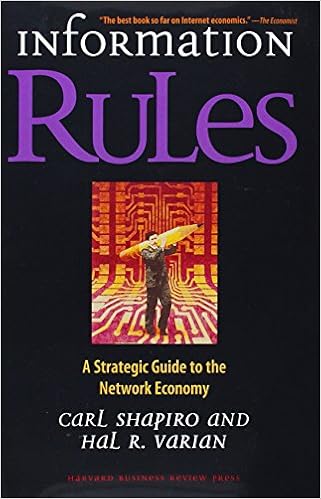
Information Rules (資訊經營法則)


C. Shapiro and H.R. Varian, Information Rules: A Strategic Guide to the Network Economy, Harvard Business School Press, 1998.
張美惠翻譯,資訊經營法則,時報出版,2000
In Information Rules, authors Shapiro and Varian reveal that many classic economic concepts can provide the insight and understanding necessary to succeed in the information age. They argue that if managers seriously want to develop effective strategies for competing in the new economy, they must understand the fundamental economics of information technology. Whether information takes the form of software code or recorded music, is published in a book or magazine, or even posted on a website, managers must know how to evaluate the consequences of pricing, protecting, and planning new versions of information products, services, and systems. The first book to distill the economics of information and networks into practical business strategies, Information Rules is a guide to the winning moves that can help business leaders navigate successfully through the tough decisions of the information economy.
本書歸納的經濟法則歷久彌新,值得推薦給學生和專業人士了解
Chapter 1 of Information Rules begins with a description of the change brought on by technology at the close of the century--but the century described is not this one, it's the late 1800s. One hundred years ago, it was an emerging telephone and electrical network that was transforming business. Today it's the Internet. The point? While the circumstances of a particular era may be unique, the underlying principles that describe the exchange of goods in a free-market economy are the same.

11/03/2020

A Nonparametric Approach to Modeling Choice with Limited Data

Vivek F. Farias, Srikanth Jagabathula, and Devavrat Shah, A Nonparametric Approach to Modeling Choice with Limited Data, Management Science, February 2013, Vol. 59, No. 2, pp. 305-322. 

Choice models today are ubiquitous across a range of applications in operations and marketing. Real-world implementations of many of these models face the formidable stumbling block of simply identifying the “right” model of choice to use. Because models of choice are inherently high-dimensional objects, the typical approach to dealing with this problem is positing, a priori, a parametric model that one believes adequately captures choice behavior. This approach can be substantially suboptimal in scenarios where one cares about using the choice model learned to make fine-grained predictions; one must contend with the risks of mis-specification and overfitting/underfitting. Thus motivated, we visit the following problem: For a “generic” model of consumer choice (namely, distributions over preference lists) and a limited amount of data on how consumers actually make decisions (such as marginal information about these distributions), how may one predict revenues from offering a particular assortment of choices? An outcome of our investigation is a nonparametric approach in which the data automatically select the right choice model for revenue predictions. The approach is practical. Using a data set consisting of automobile sales transaction data from a major U.S. automaker, our method demonstrates a 20% improvement in prediction accuracy over state-of-the-art benchmark models; this improvement can translate into a 10% increase in revenues from optimizing the offer set. We also address a number of theoretical issues, among them a qualitative examination of the choice models implicitly learned by the approach. We believe that this paper takes a step toward “automating” the crucial task of choice model selection.

The authors formulated the minimum revenue problem under consumer choices as a linear programming with exponential growing of decision variables in terms of product number. Based on duality, they developed polynomial-time algorithms by using constraint sampling and efficient representation of purchase permutations. Profs. Farias and Shah then founded the company Celect and was later acquired by Nike. Once again, it demonstrates the positive cycle of advanced research and academic-industrial collaboration.
8/08/2020

A Study of More Than 250 Platforms Reveals Why Most Fail

David B. Yoffie, Annabelle Gawer, and Michael A. Cusumano, A Study of More Than 250 Platforms Reveals Why Most Fail, HBR, May 29, 2019.

Platforms have become one of the most important business models of the 21st century. In our newly-published book, we divide all platforms into two types:  Innovation platforms enable third-party firms to add complementary products and services to a core product or technology. Prominent examples include Google Android and Apple iPhone operating systems as well as Amazon Web Services. The other type, transaction platforms, enable the exchange of information, goods, or services. Examples include Amazon Marketplace, Airbnb, or Uber.

7/16/2020

貝佐斯寫給股東的信 (The Bezos Letters)

李芳齡貝佐斯寫給股東的信:亞馬遜14條成長法則帶你事業、人生一起飛大塊文化 2019
Steve Anderson and Karen Anderson, The Bezos Letters: 14 Principles to Grow Your Business Like Amazon, Morgan James Publishing, 2019
濃縮21封貝佐斯致股東信精華,構建四階段成長循環,總結14條事業成長法則,揭開貝佐斯透過哪些教訓、心態和步驟,塑造出亞馬遜今日的偉大成就。 
不論組織型態、規模大小、行業別等,任何企業主、領導人、執行長、經理人和員工個人,都可以應用這些法則,快速地讓自己的事業變得更有效率、更有生產力、更成功。

10/06/2019

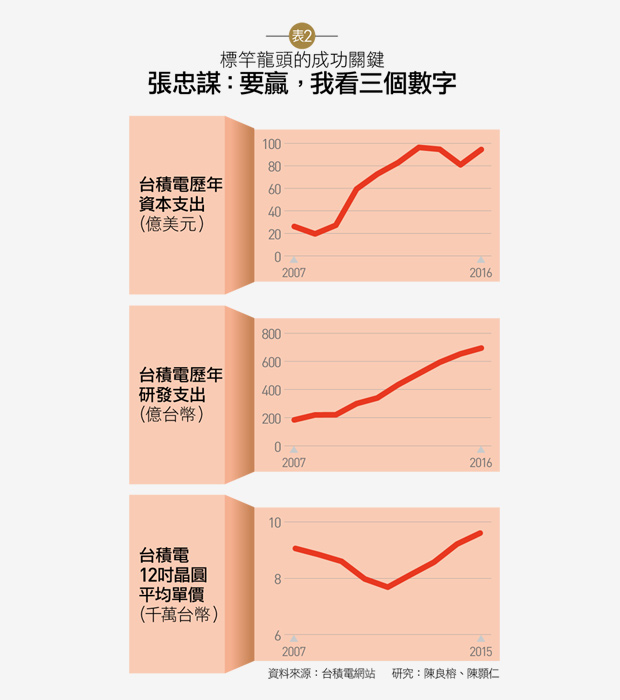
張忠謀 「總經理的學習」演講

要做好總經理的職位,張忠謀認為不要忽視業務行銷的重要性,擁有敏銳的市場嗅覺、帶領團隊往正確的方向走;也需具備凝聚團隊能力的本事。... 
人才學習要「斜槓」,才能與國際接軌 
一開場張忠謀就點出台灣目前在理工方面的技術與 MBA 能力與國際間的關係。他認為台灣在理工技術上的實力與國際間的名校如 MIT、哈佛等相差無幾,但是MBA(工商管理碩士)的素質卻是差距頗大,除了我國沒有世界級企業的進駐,少了可讓校園人才有學習跟銜接的機會外,他走遍史丹佛、哈佛甚至是台大、政大的 MBA 演講並開放提問,台灣在提問深度也是他覺得與國際一流學校人才差一截的主因。...